

 众智
众智For decades the story of Chinese farm machinery on the world stage was a simple one. Chinese factories built affordable tractors and basic implements aimed at price-sensitive buyers in developing markets. Quality was adequate. Technology was modest. Global leaders in Europe Japan and North America kept their grip on the premium segments where horsepower automation and precision electronics mattered most. That story is now changing quickly and 2026 looks like the year the shift became impossible to ignore.
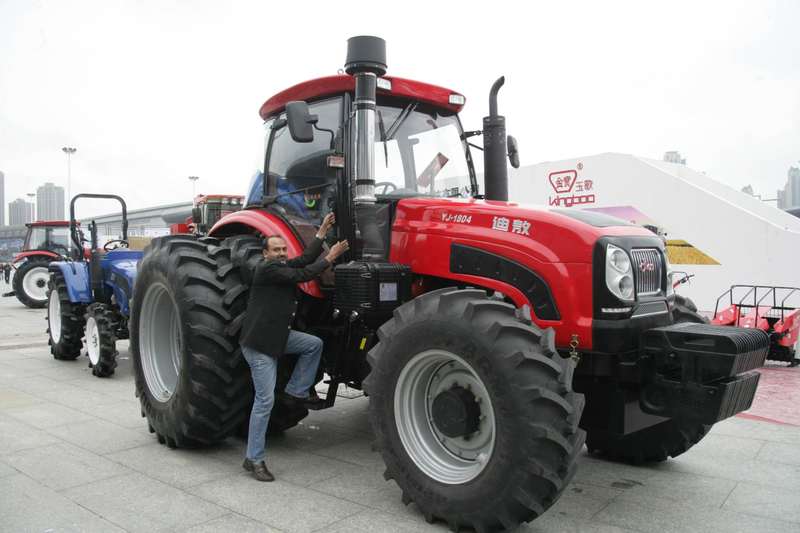
Chinese manufacturers are no longer content to compete only on price. They are pushing into high-horsepower tractors hybrid combine harvesters electrified drivetrains and increasingly sophisticated smart farming systems. This matters far beyond the borders of China. It matters for American European and Latin American farmers who have long relied on a handful of established brands and it matters for every dealer network built around decades of trust in parts supply and service.
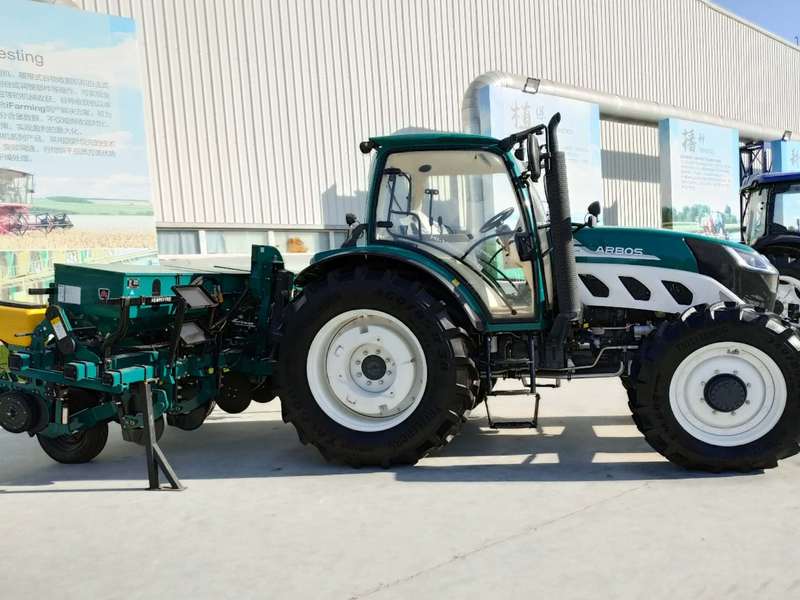
The scale behind this push is already enormous. Domestic manufacturers now supply roughly nine tenths of the domestic agricultural machinery market of China even though imported brands still hold an edge in the most advanced premium equipment. Exports have grown just as fast. Chinese agricultural machinery shipments abroad topped nine point seven billion dollars in 2025 a jump of more than thirty percent over the prior year. That combination of a vast domestic base and rapidly expanding export volume gives Chinese manufacturers a springboard that few emerging producers anywhere in the world can match.
For years the winning formula for Chinese equipment abroad was simple. Build smaller tractors keep the price low and target buyers for whom the sticker price outweighed almost every other consideration. That approach built real market share in parts of Africa Asia and Latin America. But the next phase of growth looks fundamentally different. Chinese engineers and manufacturers are now chasing the categories where horsepower electronics automation fuel efficiency and total field performance decide who wins the sale. Those are exactly the categories where the biggest global equipment makers have built their most profitable business lines for generations.
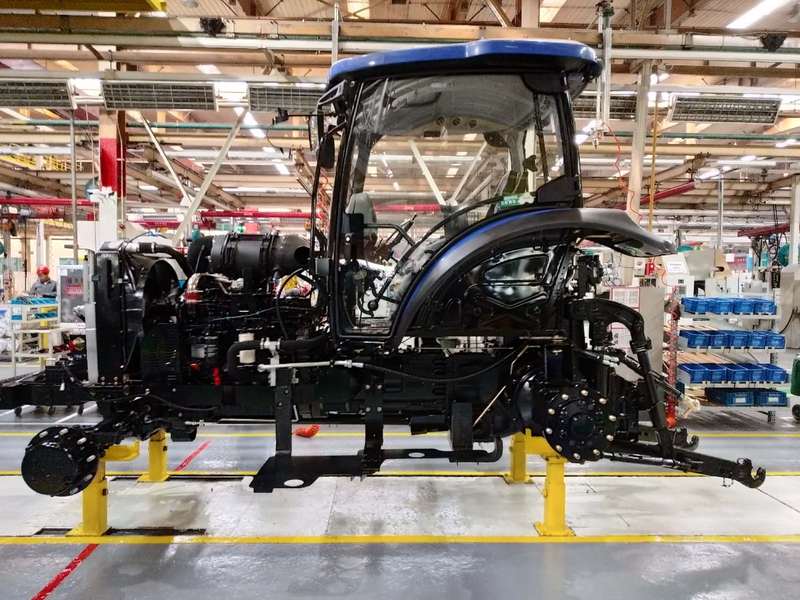
Tractors offer the clearest illustration of how far the ambition now reaches. Chinese engineering programs have already unveiled hybrid concept tractors with maximum output approaching twelve hundred horsepower. That figure places these machines in territory once associated almost exclusively with the largest western manufacturers and puts real distance between this new generation and the compact utility tractors that built the early export reputation of China. These concept machines typically pair a large diesel engine with electric motors at the axles or implement drives which allows engineers to push peak output well beyond what a conventional mechanical drivetrain could reliably handle in the field. At the same time new manufacturing plants are coming online specifically to produce tens of thousands of tractors above one hundred horsepower every year and several of these facilities are being built with automation and quality control systems designed to meet export grade standards rather than only domestic requirements. Provincial governments in some cases have offered land and infrastructure incentives to attract this investment which shows how closely tied the push is to broader industrial policy goals. Whether the most extreme prototypes ever reach mass commercial production is almost beside the point. Few farms anywhere in the world actually need a twelve hundred horsepower tractor and even the largest western manufacturers treat their flagship models mainly as engineering showcases rather than high volume sellers. Their existence signals intent. China wants to climb the technology ladder and it wants to climb it fast and it wants global buyers watching every step of that climb.
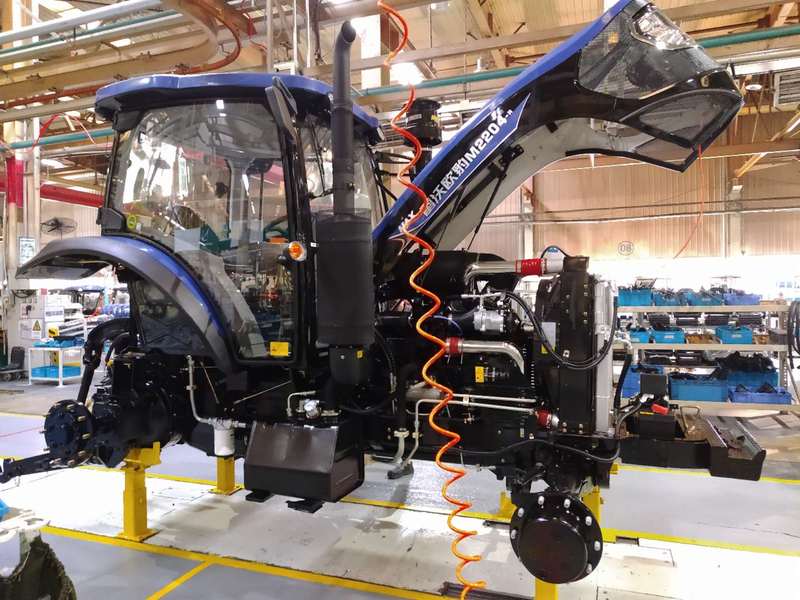
The same pattern is unfolding in combine harvesters. New Chinese machines now combine diesel engines with electric drive systems and reach maximum output above six hundred horsepower. The real significance is not the horsepower number itself. It is the industrial foundation behind it. China can draw on manufacturing expertise built for automobiles batteries consumer electronics and heavy construction equipment and pour that expertise directly into farm machinery. Electric motors advanced power electronics automation software and sensor driven control systems are arriving in Chinese-built tractors and combines at a scale that would have seemed almost unimaginable a decade ago.
Electrification could end up being one of the most important cards China has to play even though farm equipment presents very different engineering demands than passenger cars. Tractors and combines often run for ten or twelve hours a day under heavy continuous load and frequently work far from any charging infrastructure. Fully battery powered machines therefore still face serious practical limits in large-scale row crop and broad-acre farming. Hybrid powertrains look like a far more realistic near-term path. They pair a conventional engine with electric components so that power generation distribution and control all improve without making an entire day in the field dependent on how much charge is left in a battery pack.
Government policy has played a real role in accelerating this shift and it would be a mistake to view the current push purely as the product of private companies chasing market share on their own. Beijing has treated agricultural mechanization and food security as strategic priorities for years and state support has flowed into research subsidies favorable financing for equipment makers and coordinated industrial planning aimed squarely at reducing reliance on foreign technology. Large state owned and privately held manufacturers alike have benefited from this backing and it has allowed them to fund expensive engineering programs such as hybrid drivetrains and high-horsepower prototypes even before a clear commercial payoff is guaranteed. That kind of patient capital gives Chinese manufacturers room to experiment at a pace that purely market driven competitors elsewhere sometimes struggle to match.
Precision agriculture and autonomous operation form another front in this broader push and one that deserves close attention from anyone tracking where farm machinery technology is headed next. Chinese equipment makers are investing heavily in satellite guidance systems onboard sensors machine vision and early autonomous driving features for tractors and harvesters. Some of this work draws directly on expertise developed in the fast growing autonomous vehicle and robotics industries of China which gives agricultural engineers access to sensor packages and software talent that would otherwise take years to build from scratch. Companies that spent years refining lidar cameras and navigation algorithms for passenger cars and delivery robots are now redirecting that same engineering base toward fields and orchards and the crossover is speeding up development timelines that would normally stretch across a decade. Several manufacturers have already demonstrated unmanned tractors capable of following mapped field boundaries without a driver in the cab and some combine harvesters now include automated header height adjustment and yield mapping features that once appeared only on the most expensive western platforms. Whether these systems can match the reliability and field proven track record of established precision agriculture platforms remains an open question. Sensors that perform well on paved roads and predictable traffic patterns face a very different test in muddy uneven fields dust heavy harvest conditions and unpredictable obstacles such as loose livestock or irrigation equipment. Software also needs years of real world field data before it earns the trust of commercial farm operators. Even so the direction of investment is unmistakable and it mirrors the broader move into high-horsepower and hybrid equipment described above.
None of this means established manufacturers should expect to lose their grip on the American market any time soon. Building an impressive tractor or an advanced hybrid combine is only one part of what it takes to compete in professional agriculture. Dealer coverage matters enormously. Parts availability matters. Trained service technicians financing options warranty support and uptime during the narrow windows of planting and harvest all weigh just as heavily on a purchase decision as horsepower specifications on a brochure. A lower price at the moment of purchase loses its appeal almost instantly if a combine sits idle in the middle of harvest because a critical component cannot be sourced quickly enough.
Resale value adds another layer of difficulty for any new entrant. Established equipment makers have spent decades building dealer networks used equipment markets and financing programs that shape what economists call total cost of ownership for American farmers. A tractor is never judged purely on its purchase price. Maintenance costs reliability over thousands of hours residual value at trade-in time and the ease of eventually selling the machine all factor into the real cost of owning it. Any Chinese manufacturer hoping to move into premium categories will need to build that same kind of long-term confidence among buyers and not just demonstrate strong specifications on paper.
The implications of this shift reach well beyond the United States. Latin America Africa and other parts of Asia represent enormous opportunities for Chinese manufacturers to build international scale establish distribution networks and gather real operating experience under farming conditions very different from those found in China itself. Brazil and Argentina stand out as particularly important proving grounds. Their large-scale soybean and corn operations demand machinery capable of running across vast acreage for long stretches which represents a far tougher test than simply competing in smaller lower-horsepower categories where Chinese brands already have a foothold.
The expansion of China is also arriving at a moment when the geography of global farm equipment manufacturing itself is shifting. Asia as a whole is becoming a more important production hub for agricultural machinery. India continues expanding its own manufacturing and export capacity. Meanwhile long-established global equipment makers are increasingly weaving Asian suppliers and Asian manufacturing platforms into their own supply chains. China is entering this broader transition with enormous domestic demand behind it and with industrial supply chains already built for sectors many times larger than farm equipment such as electric vehicles and consumer batteries.
For American farmers watching all of this unfold the most important question is not really whether a Chinese company can engineer a twelve hundred horsepower tractor or a six hundred horsepower hybrid combine. Engineering impressive prototypes has never been the hardest part of this business. The real test is whether those machines can deliver competitive uptime reasonable operating costs and solid resale value after thousands of hours working real fields season after season. It is also whether a dealer somewhere nearby can actually supply a critical replacement part during the most demanding week of harvest when every hour of downtime carries a real cost.
China has already proven beyond doubt that it can manufacture farm equipment at an extraordinary scale and increasingly with real technological sophistication behind it. What remains far less certain is how that equipment performs once it leaves the factory floor and enters the daily grind of commercial agriculture. That is the arena where global farm machinery leadership is actually decided and it is the arena where the next chapter for China will truly be written.

小程序扫码观看
更多农机资讯尽在农机一键查
版权声明:本文仅代表作者观点,不代表农机新闻网立场。 本文为分享行业信息所用,如需转载,请联系原作者。
网友评论仅供其表达个人看法,并不代表农机新闻立场。

中国制造商已不再满足于仅靠价格竞争。他们正进军大马力拖拉机、混合动力联合收割机、电动传动系统和日益精密的智能农业系统领域。这一转变的影响远超中国国界——它不仅关乎长期依赖少数老牌品牌的欧美及拉美农民,也关乎每一个建立在数十年零部件供应与服务信任基础上的经销商网络。
搞个中文标题更好
S K Ali:中国从低成本拖拉机迈向高科技农业
跟学英语

.png)